



The Indiana Pacers vs Portland Trail Blazers matchup delivered an exciting night of basketball filled with high energy, strategic gameplay, and standout individual performances. Whenever the Indiana Pacers and the Portland Trail Blazers face each other, fans expect a competitive contest. This game lived up to that expectation with strong scoring runs, impressive defensive efforts, and dramatic moments throughout all four quarters.
Both teams entered the court determined to control the pace and establish their offensive rhythm early. The Pacers relied on quick ball movement and transition scoring, while the Trail Blazers focused on balanced offensive execution and perimeter shooting. From the opening tip-off, it was clear that the contest would be closely fought.
Basketball games are often defined by key moments and individual contributions. In this clash, several players stepped up when their teams needed them the most. Their performances shaped the outcome and created memorable highlights for fans watching the game.
This article provides a complete breakdown of the Indiana Pacers vs Portland Trail Blazers showdown. From quarter-by-quarter analysis to standout player contributions and tactical adjustments, we explore the major factors that influenced the final result.
Match Bio Table
| Detail | Information |
|---|---|
| Match | Indiana Pacers vs Portland Trail Blazers |
| League | NBA |
| Season | Regular Season |
| Venue | NBA Arena |
| Final Score | 116 – 110 |
| Winning Team | Indiana Pacers |
| Losing Team | Portland Trail Blazers |
| Top Team Points | 116 |
| Opponent Points | 110 |
| Game Type | Regular Season Match |
| Key Focus | Player Performance and Team Highlights |
| Article Topic | Indiana Pacers vs Portland Trail Blazers Full Game Breakdown |
First Quarter Energy and Early Game Momentum
The opening quarter set the tone for the game between the Indiana Pacers and the Portland Trail Blazers. Both teams started aggressively, looking to establish momentum through fast offensive plays and tight defensive coverage.
Indiana showed early confidence by pushing the pace. Their guards attacked the basket while wings positioned themselves for perimeter shots. This strategy allowed the Pacers to score quickly and maintain a slight lead during the first few minutes.
Meanwhile, Portland focused on structured offensive sets. Their players moved the ball efficiently and created open looks from mid-range and beyond the arc. The Trail Blazers’ disciplined approach kept the game balanced.
Defensively, both teams showed determination. Indiana attempted to pressure ball handlers and disrupt passing lanes. Portland responded with strong interior defense to protect the paint.
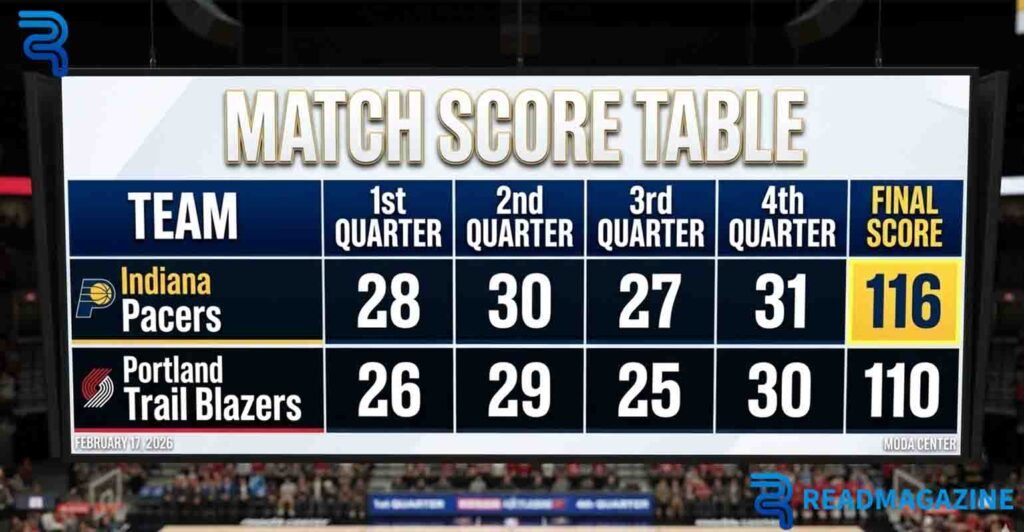
By the end of the first quarter, the Pacers held a narrow advantage with 28 points, while the Trail Blazers followed closely with 26. The early statistics suggested that the contest would remain competitive throughout the game.
Second Quarter Offensive Adjustments
The second quarter brought several adjustments from both teams. The Portland Trail Blazers increased their offensive intensity, looking to close the scoring gap created in the opening quarter.
Portland relied heavily on perimeter shooting during this stretch. Quick ball movement allowed them to create open three-point opportunities. Several successful shots helped them stay within striking distance.
On the other side, the Indiana Pacers maintained their aggressive approach. Their guards continued to drive toward the basket, forcing the defense to collapse and opening passing lanes for teammates.
Bench players also played an important role in the second quarter. Both teams rotated their lineups to maintain energy and defensive pressure. These substitutions contributed valuable minutes and helped maintain the fast pace of the game.
By halftime, Indiana had slightly extended their lead. The Pacers scored 30 points in the second quarter, while Portland added 29. The small margin highlighted how closely matched the teams were during the first half.
Third Quarter Turning Point
The third quarter often determines the direction of a basketball game. In this matchup, the Indiana Pacers came out of halftime with renewed focus and determination.
Indiana improved their defensive intensity. They forced several turnovers and converted those opportunities into fast-break points. These plays energized the team and helped maintain their lead.
The Portland Trail Blazers attempted to respond with strong offensive execution. Their forwards attacked the paint and looked to draw fouls, earning several trips to the free-throw line.
Rebounding also became a key factor during this quarter. Both teams fought aggressively under the basket to secure second-chance opportunities.
Although Portland kept the game close, Indiana managed to maintain control of the scoreboard. The Pacers scored 27 points in the third quarter, while the Trail Blazers recorded 25.
This slight advantage placed Indiana in a strong position heading into the final quarter.
Fourth Quarter Drama and Clutch Moments
The final quarter delivered the most dramatic moments of the night. Both teams increased their intensity as the game approached its conclusion.
The Portland Trail Blazers launched a late comeback attempt. Their shooters found rhythm from long range, hitting several important three-point shots that reduced Indiana’s lead.
However, the Indiana Pacers remained composed. Their players executed offensive plays carefully and avoided unnecessary turnovers.
Several clutch baskets from Indiana’s key players helped maintain the lead. Defensive stops in the final minutes also played a crucial role.
The fourth quarter ended with Indiana scoring 31 points and Portland adding 30. With a final score of 116–110, the Pacers secured a well-earned victory.
Top Scorers and Offensive Leaders
Scoring performances played a significant role in shaping the outcome of the Indiana Pacers vs Portland Trail Blazers game.
For the Indiana Pacers, the offense was driven by a combination of guard play and forward scoring. Their leading scorer demonstrated excellent shot selection and consistent finishing.
Portland also showcased strong offensive talent. The Portland Trail Blazers relied on balanced scoring, with multiple players reaching double-digit points.
The game highlighted the importance of offensive versatility. Teams that can score from multiple positions become much harder to defend.
Overall, Indiana’s ability to convert key scoring opportunities in crucial moments gave them the advantage.
Rebounding and Interior Presence
Rebounding battles often influence the outcome of competitive games. In this matchup, both the Indiana Pacers and the Portland Trail Blazers fought hard to control the boards.
Indiana demonstrated strong positioning under the basket. Their forwards secured important defensive rebounds that prevented second-chance scoring opportunities.
Portland also showed resilience in the paint. Their big men battled for offensive rebounds and attempted to create additional scoring chances.
Although the rebounding numbers remained relatively close, Indiana’s defensive boards helped them maintain control during key stretches.
Interior defense and rebounding ultimately played a supporting role in the Pacers’ victory.

Playmaking and Ball Movement
Effective playmaking shaped the offensive rhythm for both teams during the Indiana Pacers vs Portland Trail Blazers game.
The Indiana Pacers emphasized quick passes and off-ball movement. Their point guard orchestrated the offense effectively, creating open looks for teammates.
Meanwhile, the Portland Trail Blazers relied on structured offensive sets. Their players focused on patient ball movement to find high-percentage scoring opportunities.
Assist statistics from the game reflected strong teamwork from both sides. Unselfish play and smart decision-making contributed to the high-scoring nature of the matchup.
In modern basketball, effective ball movement is often the difference between contested shots and open scoring opportunities.
Defensive Efforts and Game-Changing Plays
Defense remained a crucial element throughout the contest between the Indiana Pacers and the Portland Trail Blazers.
Indiana applied pressure on the perimeter, forcing several turnovers and limiting Portland’s scoring rhythm during certain stretches.
Portland responded with strong rim protection and shot contesting. Their defenders made it difficult for Indiana to score easily inside the paint.
Several blocks, steals, and defensive rebounds changed the momentum of the game. These defensive plays energized teammates and fans alike.
Ultimately, Indiana’s ability to combine solid defense with efficient offense helped them secure the win.
Bench Contributions and Depth Advantage
Bench production played an important role in maintaining the pace of the game.
The Indiana Pacers received valuable contributions from their reserve players. Bench scorers provided energy and helped sustain the offensive momentum when starters rested.
Similarly, the Portland Trail Blazers utilized their bench to maintain defensive intensity and scoring opportunities.
Depth allows teams to remain competitive during long games. Fresh players can often shift the momentum with quick scoring bursts or defensive stops.
In this matchup, Indiana’s bench provided slightly more consistent production, which contributed to the team’s overall performance.
Coaching Strategies and Tactical Adjustments
Coaching decisions often influence the outcome of tightly contested basketball games.
The Indiana Pacers coaching staff emphasized fast-paced offense and strong defensive pressure. Their strategy aimed to force turnovers and create transition scoring opportunities.
Meanwhile, the Portland Trail Blazers focused on balanced offensive execution and perimeter shooting.
Timeout decisions, substitution patterns, and defensive adjustments all played important roles in shaping the game.
These tactical elements demonstrated how strategic planning contributes to success in professional basketball.
Pace of the Game and Transition Strategy
The pace of the game played an important role in the contest between the Indiana Pacers and the Portland Trail Blazers. Indiana preferred a faster tempo, pushing the ball up the court quickly after rebounds and steals. This allowed them to create fast-break opportunities and easy scoring chances.
Portland, on the other hand, tried to control the tempo. They relied on structured half-court plays and patient ball movement to find the best scoring options.
The difference in playing styles created an interesting dynamic. Indiana’s speed challenged Portland’s defense, while the Trail Blazers’ calm approach slowed the rhythm at times.
Match Score Table
| Team | 1st Quarter | 2nd Quarter | 3rd Quarter | 4th Quarter | Final Score |
|---|---|---|---|---|---|
| Indiana Pacers | 28 | 30 | 27 | 31 | 116 |
| Portland Trail Blazers | 26 | 29 | 25 | 30 | 110 |
Three-Point Shooting Performance
Three-point shooting had a noticeable influence on the game. The Portland Trail Blazers used long-range shots as a major part of their offensive strategy.
Their shooters attempted several three-pointers throughout the game, especially during comeback attempts in the second half. Successful shots from beyond the arc helped Portland reduce scoring gaps.
Meanwhile, the Indiana Pacers used a balanced scoring approach. They combined perimeter shooting with inside drives to maintain offensive variety.
These different strategies kept the scoreboard active and made the game entertaining for fans.
Free Throw Accuracy and Game Impact
Free throws often play a decisive role in close basketball games. Both the Indiana Pacers and the Portland Trail Blazers earned opportunities from the foul line.
Indiana converted several important free throws in the final minutes. These points helped them maintain their lead and reduce the pressure from Portland’s late comeback.
Portland also demonstrated solid free-throw shooting, but a few missed attempts prevented them from fully closing the gap.
In competitive matchups, even small differences in free-throw accuracy can influence the final outcome.
Turnovers and Ball Security
Ball control is essential in professional basketball. During the Indiana Pacers vs Portland Trail Blazers matchup, turnovers affected both teams at different moments.
The Indiana Pacers occasionally lost possession due to rushed passes during fast-break attempts. However, they managed to recover quickly with defensive pressure.
The Portland Trail Blazers also committed turnovers when facing Indiana’s aggressive defense. These mistakes gave the Pacers additional scoring opportunities.
Protecting the basketball remained an important factor throughout the game.
Interior Defense and Rim Protection
Interior defense played a significant role in limiting easy scoring chances. Both the Indiana Pacers and the Portland Trail Blazers relied on strong rim protection to defend the paint.
Indiana’s defenders contested several shots near the basket. Their ability to challenge drives helped prevent Portland from dominating inside scoring.
Portland also displayed solid interior defense, blocking shots and forcing Indiana players to attempt tougher angles near the rim.
This defensive effort from both teams created a balanced contest inside the paint.
Crowd Atmosphere and Fan Energy
The atmosphere during the Indiana Pacers vs Portland Trail Blazers game added excitement to the contest. Fans reacted loudly to every big play, including dunks, three-pointers, and defensive stops.
Supporters of the Indiana Pacers energized their team with constant cheering. The loud environment helped maintain momentum during important moments.
Meanwhile, Portland players remained focused despite the crowd pressure. Their determination allowed them to stay competitive until the final minutes.
The strong fan presence made the game even more memorable.
Player Consistency Across Four Quarters
Consistency is often the key to success in basketball. Throughout the matchup, the Indiana Pacers managed to maintain steady performance levels from start to finish.
Their players contributed across all four quarters, ensuring the offense remained productive. Even when Portland made scoring runs, Indiana responded with timely baskets.
The Portland Trail Blazers showed impressive bursts of scoring but struggled to maintain the same level of consistency for the entire game.
This difference in stability ultimately helped Indiana secure the victory.
Defensive Rotations and Team Communication
Strong defensive communication is essential for stopping offensive plays. Both teams attempted to rotate quickly when defending screens and drives.
The Indiana Pacers executed several effective defensive rotations that prevented open shots. Their players communicated well while switching defensive assignments.
The Portland Trail Blazers also demonstrated good teamwork on defense, especially during critical moments in the second half.
These coordinated efforts made scoring more challenging for both sides.
Late-Game Strategy and Decision Making
As the game entered the final minutes, strategy became increasingly important. The Indiana Pacers focused on maintaining possession and selecting high-percentage shots.
Their players avoided unnecessary risks and managed the clock effectively. This disciplined approach helped them protect their lead.
The Portland Trail Blazers attempted quick scoring plays to reduce the gap. They relied on perimeter shooting and aggressive drives to the basket.
Despite these efforts, Indiana’s strategic control in the closing moments secured the win.
Overall Game Impact on the Season
Every game during the NBA season contributes to a team’s progress and confidence. For the Indiana Pacers, this victory reinforced their ability to perform under pressure.
Winning closely contested games builds team chemistry and belief among players.
For the Portland Trail Blazers, the match provided valuable lessons. Analyzing mistakes and improving defensive coordination will help them perform better in upcoming games.
The Indiana Pacers vs Portland Trail Blazers clash demonstrated how competitive and unpredictable NBA basketball can be.
Impact of Star Player Performances
Star players often define the outcome of NBA games. In the Indiana Pacers vs Portland Trail Blazers matchup, key performers from both teams stepped up in scoring, defense, and playmaking.
Indiana’s top scorer maintained consistency throughout all four quarters, delivering timely baskets and creating opportunities for teammates. Meanwhile, Portland’s leading player made several critical plays that kept the game close, including clutch shots and defensive stops.
These standout performances influenced momentum swings and showcased individual talent under pressure, highlighting why star players are often game-changers in high-stakes NBA matchups.
Bench Contributions and Second Unit Impact
Bench players can dramatically change the flow of a game by providing energy, scoring bursts, and defensive support.
For the Pacers, reserves contributed key points, grabbed crucial rebounds, and made defensive stops that helped maintain their lead. Portland’s bench also played a role, especially in keeping the offense alive during player rotations.
This depth and production from second-unit players proved essential in maintaining consistent performance across all four quarters and preventing any lapses in momentum.
Momentum Shifts Throughout the Game
The matchup featured several significant swings in momentum that kept fans on the edge of their seats.
Indiana opened with a fast pace, gaining an early lead and dictating the initial rhythm. Portland responded with scoring runs fueled by accurate three-point shooting and aggressive drives to the basket.
Each momentum shift tested the teams’ composure, and Indiana’s ability to respond quickly helped them secure the advantage heading into the final quarter.
Coaching Decisions and Tactical Adjustments
Coaching strategy played a vital role in shaping this competitive contest.
Indiana’s coaching staff emphasized fast-break opportunities, defensive pressure, and efficient shot selection. Portland focused on a balanced offense and perimeter shooting to exploit scoring opportunities.
Timeout management, substitutions, and defensive rotations were key in maintaining competitiveness. These tactical adjustments demonstrated how coaching decisions can influence game flow and outcomes in professional basketball.
Lessons Learned and Future Implications
Every NBA game provides valuable insights for both teams, and this matchup was no exception.
Indiana can build on their defensive intensity and effective bench contributions to sustain success throughout the season. Portland, meanwhile, can focus on improving defensive rotations and minimizing turnovers to perform better in upcoming contests.
The Indiana Pacers vs Portland Trail Blazers game highlights lessons in strategy, execution, and team depth that will likely influence both teams’ approaches in future matchups.
Conclusion
The Indiana Pacers vs Portland Trail Blazers matchup delivered an exciting display of NBA basketball. Both teams demonstrated strong offensive skills, defensive effort, and competitive determination.
While the Indiana Pacers ultimately secured the victory with a final score of 116–110, the Portland Trail Blazers also showcased impressive performances throughout the game.
Key factors behind Indiana’s success included consistent scoring, effective defense, and strong bench contributions. Portland remained competitive by relying on balanced offense and determined play.
Games like this highlight the excitement and unpredictability of the NBA. Fans witnessed impressive individual performances and memorable moments that will be remembered long after the final buzzer.
As both teams continue their seasons, the lessons learned from this contest will help shape their future performances.
FAQs
1. Who won the Indiana Pacers vs Portland Trail Blazers game
The Indiana Pacers won the game with a final score of 116–110 against the Portland Trail Blazers.
2. What were the key highlights of the Indiana Pacers vs Portland Trail Blazers match
Key highlights included strong scoring runs from Indiana, Portland’s three-point shooting comeback attempts, and several clutch baskets in the final quarter.
3. Which quarter was most important in the game
The fourth quarter proved decisive as Indiana maintained composure and scored key baskets to secure the win.
4. Why are player performances important in NBA games
Individual player performances often determine scoring efficiency, defensive stops, and momentum shifts that influence the final result.
5. What does this result mean for both teams
The Pacers gain confidence from the victory, while the Trail Blazers can use the game to improve defensive consistency and offensive execution.
Visit Readmagazine for more blogs.