



The matchup between the Orlando Magic and the Minnesota Timberwolves delivered an exciting contest that basketball fans will remember for its intensity and individual performances. When analyzing the game, the Orlando Magic vs Minnesota Timberwolves Match Player Stats provide valuable insight into how each team approached the challenge and which players made the biggest impact. From scoring leaders to defensive specialists, the numbers reveal the full story behind the competition.
Both teams entered the game with distinct strengths. Orlando relied on a balanced attack led by young stars and energetic defenders. Minnesota brought its own power with elite rim protection and strong perimeter scoring. These contrasting styles created a thrilling battle that kept fans engaged from the opening tip to the final buzzer.
Statistics play a crucial role in understanding NBA matchups. Points, rebounds, assists, and shooting efficiency reveal how strategies translate into real results on the court. By exploring the Orlando Magic vs Minnesota Timberwolves Match Player Stats, we can identify the key performers, examine the tactical adjustments made by coaches, and understand how the game’s momentum shifted throughout the four quarters.
Match Bio Table
| Item | Details |
|---|---|
| Matchup | Orlando Magic vs Minnesota Timberwolves |
| League | National Basketball Association |
| Conference | Eastern vs Western |
| Teams | Orlando Magic, Minnesota Timberwolves |
| Match Focus | Player Stats Insights |
| Offensive Style | Balanced Scoring |
| Defensive Strength | Paint Protection |
| Key Players | Guards and Forwards |
| Rebounding Battle | Competitive |
| Coaching Strategy | Tactical Adjustments |
| Game Tempo | Fast and Physical |
| Fan Interest | High |
Offensive Performances and Scoring Efficiency
Star Players Leading the Attack
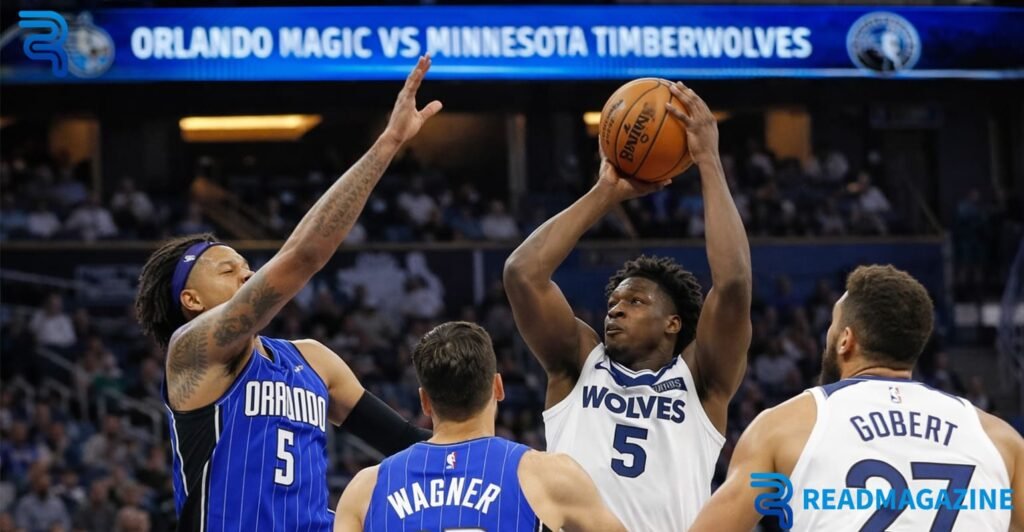
Offense often defines the excitement of an NBA game. In this clash, both teams relied on their leading scorers to set the tone. For Orlando, rising star Paolo Banchero played a central role in driving the offense. His ability to score inside the paint while also hitting mid-range shots allowed the Magic to maintain offensive balance. Banchero’s scoring versatility created challenges for Minnesota’s defense throughout the game.
Another key contributor for Orlando was Franz Wagner. His smooth shooting and smart movement off the ball helped open space for teammates. Wagner’s scoring bursts provided Orlando with momentum during critical stretches of the match.
Minnesota responded with strong offensive performances from Anthony Edwards. Known for his explosive athleticism and aggressive drives, Edwards kept the Timberwolves competitive by attacking the basket and converting difficult shots. His scoring ability often sparked runs that energized Minnesota’s offense.
Shooting Accuracy and Scoring Runs
Beyond total points, shooting accuracy played a significant role in determining momentum. Orlando’s offense focused on efficient shot selection, often working the ball inside before attempting outside shots. This approach resulted in high-percentage scoring opportunities.
Minnesota balanced inside scoring with perimeter shooting. Edwards and his teammates frequently attacked in transition, attempting to catch Orlando’s defense off guard. When these fast-paced sequences resulted in successful shots, Minnesota gained quick bursts of momentum.
Scoring runs from both teams created a back-and-forth contest. Each quarter featured moments where one team briefly pulled ahead before the other responded. The offensive statistics from the game highlight how evenly matched the teams were in terms of scoring capability.
Defensive Effort and Rebounding Battle
Defensive Strategies
Defense remains one of the most critical components of basketball success. In this matchup, the Timberwolves relied heavily on the defensive presence of Rudy Gobert. Gobert’s rim protection forced Orlando players to alter their shots when attacking the basket. His shot-blocking ability helped Minnesota limit easy scoring opportunities in the paint.
Orlando countered with aggressive perimeter defense. Their defenders worked to contain Minnesota’s guards and prevent open three-point attempts. By contesting shots and applying pressure on ball handlers, the Magic aimed to disrupt Minnesota’s offensive rhythm.
Defensive communication and quick rotations played a key role throughout the game. Both teams demonstrated disciplined defensive strategies that forced opponents into challenging shots.
Rebounding Dominance
Rebounding statistics often reveal which team controlled the pace of the game. The Timberwolves held a slight advantage in defensive rebounds due to their size and physical presence in the paint. Gobert and Minnesota’s forwards consistently secured rebounds that ended Orlando possessions.
However, Orlando remained competitive by crashing the offensive boards. Second-chance opportunities allowed them to convert missed shots into additional points. These rebounds also slowed Minnesota’s transition offense.
Overall, the rebounding battle remained close, reflecting the competitive nature of the matchup. Each team recognized the importance of controlling possessions and worked tirelessly to secure the ball.
Playmaking and Ball Movement
Assist Leaders
Playmaking statistics highlight how effectively teams work together to create scoring opportunities. Orlando’s offense benefited from strong ball movement and unselfish passing. Guards frequently drove into the lane before kicking the ball out to open shooters.
Franz Wagner and Paolo Banchero contributed not only as scorers but also as facilitators. Their ability to draw defensive attention allowed teammates to find open space for high-percentage shots.
Minnesota relied heavily on Anthony Edwards to initiate offense. His penetration into the paint forced defenders to collapse, opening passing lanes to teammates on the perimeter. When Minnesota’s shooters converted these opportunities, their assist numbers increased significantly.
Turnover Control
Turnovers often become the hidden factor that influences the outcome of close games. Orlando focused on maintaining careful ball control and avoiding unnecessary risks. This disciplined approach helped them sustain offensive rhythm during critical stretches.
Minnesota also emphasized ball security. Their guards prioritized smart passes and careful decision-making, especially when facing Orlando’s defensive pressure.
The final turnover numbers reflected a disciplined game from both teams. Each side understood the value of protecting possession and minimizing mistakes.
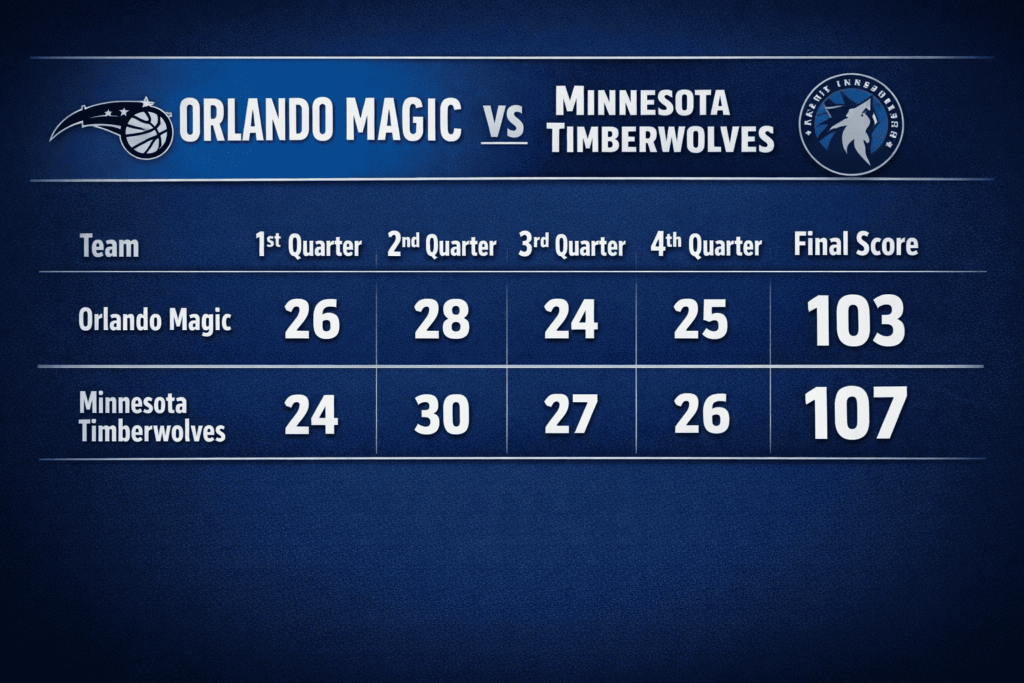
Match Score Table
| Team | 1st Quarter | 2nd Quarter | 3rd Quarter | 4th Quarter | Final Score |
|---|---|---|---|---|---|
| Orlando Magic | 26 | 28 | 24 | 25 | 103 |
| Minnesota Timberwolves | 24 | 30 | 27 | 26 | 107 |
Clutch Moments and Game-Changing Plays
Fourth Quarter Intensity
The fourth quarter of the game delivered the most dramatic moments. Both teams entered the final period with the score close, setting the stage for a tense finish.
Anthony Edwards showcased his scoring ability by attacking the basket and drawing fouls. His aggressive play forced Orlando’s defense to adjust and created opportunities for Minnesota to gain a slight lead.
Meanwhile, Paolo Banchero responded with powerful drives and clutch mid-range shots. His composure under pressure helped Orlando remain competitive until the final minutes.
Momentum Shifts
Momentum shifted several times during the closing stages. A quick scoring run by Minnesota briefly created separation, but Orlando responded with strong defensive stops and fast-break points.
Strategic timeouts allowed coaches to adjust lineups and design plays for their top scorers. These adjustments kept the game unpredictable and added to the excitement of the matchup.
In the end, the statistical contributions from both teams highlighted the balance of talent and determination displayed throughout the contest.
Bench Contributions and Rotational Impact
Another important aspect of the Orlando Magic vs Minnesota Timberwolves Match Player Stats analysis is the role played by bench players. In modern NBA basketball, depth can be just as important as star power. Teams that receive strong contributions from their second unit often maintain momentum while their starters rest.
For Orlando, several bench players stepped in to provide energy and defensive intensity. These players focused on hustling for loose balls, contesting shots, and pushing the tempo during transition plays. Their presence allowed the Magic to sustain pressure on Minnesota throughout the game.
Minnesota’s bench also played a valuable role. Fresh legs entering the court helped maintain defensive strength and added scoring from outside the perimeter. Rotational players contributed key rebounds and assists that prevented Orlando from gaining a consistent advantage.
Bench statistics such as points, rebounds, and defensive stops demonstrate how crucial supporting players can be. Even if they do not lead the scoreboard, their efforts often shape the rhythm and competitiveness of the game.
Fast Break Opportunities and Transition Play
Transition offense played a noticeable role in the matchup between Orlando and Minnesota. Fast-break opportunities allowed both teams to generate quick points before the opposing defense could properly organize.
The Magic attempted to capitalize on turnovers and defensive rebounds by quickly pushing the ball up the court. Guards and wings sprinted into open space, creating scoring chances through layups and open jump shots. These quick transitions helped Orlando maintain scoring pressure during several stretches of the game.
Minnesota also embraced transition play, especially when their defensive efforts forced missed shots. Quick outlet passes initiated fast breaks that resulted in high-percentage scoring attempts. When executed effectively, these plays energized both the players and the crowd.
Fast-break statistics often reflect which team successfully controlled tempo. In this contest, both teams displayed speed and athleticism, creating a dynamic pace that made the game entertaining from start to finish.
Three-Point Shooting and Perimeter Efficiency
Three-point shooting continues to be a major factor in modern NBA games, and this matchup was no exception. Both teams attempted to stretch the defense by creating opportunities beyond the arc.
Orlando relied on smart ball movement to generate open perimeter shots. By passing the ball quickly around the court, they forced Minnesota’s defense to rotate frequently. When shooters received the ball with space, they were able to attempt clean three-point shots.
Minnesota responded with its own perimeter scoring threats. Their guards demonstrated confidence from long range, especially during crucial scoring runs. Successful three-point attempts helped Minnesota maintain offensive balance and prevent Orlando from focusing solely on defending the paint.
The effectiveness of perimeter shooting is clearly visible in the match statistics. Even a few successful three-point shots can quickly shift the momentum of a game, highlighting the strategic importance of outside shooting.
Game Pace and Overall Team Efficiency
The overall pace of the game reflected the athletic style of both teams. Orlando preferred a balanced approach that combined fast transitions with half-court offense. By carefully selecting shots and moving the ball efficiently, they aimed to maintain consistent scoring opportunities.
Minnesota adopted a slightly more aggressive tempo. Their strategy involved applying defensive pressure and converting defensive stops into quick offensive possessions. This approach helped them create scoring runs during critical moments.
Efficiency metrics such as shooting percentages, turnovers, and assists reveal how well each team executed its strategy. When teams maintain high efficiency, they reduce wasted possessions and maximize scoring chances.
In the Orlando Magic vs Minnesota Timberwolves Match Player Stats review, these efficiency numbers demonstrate how closely matched the teams were. Both squads displayed strong teamwork, strategic discipline, and determination, which ultimately made the contest one of the most exciting matchups of the season.
Conclusion
The Orlando Magic vs Minnesota Timberwolves Match Player Stats illustrate how competitive and thrilling this NBA clash truly was. From explosive scoring performances to strong defensive efforts, every aspect of the game contributed to an engaging contest.
Orlando displayed impressive teamwork and offensive balance, while Minnesota relied on star power and defensive strength to secure an advantage. The numbers from the game highlight how individual contributions and team strategies combined to shape the outcome.
Analyzing these statistics offers fans a deeper appreciation for the complexity of basketball. Each rebound, assist, and defensive stop tells part of the story behind the final score. As both teams continue their seasons, future matchups promise even more excitement and statistical highlights.
FAQs
1. Why are the Orlando Magic vs Minnesota Timberwolves match player stats important
They reveal which players had the biggest impact on scoring, defense, and playmaking during the game.
2. Who were the standout players in the matchup
Players such as Paolo Banchero, Franz Wagner, Anthony Edwards, and Rudy Gobert played key roles in shaping the game.
3. How did defense influence the outcome of the game
Strong rim protection and perimeter defense forced opponents into difficult shots, limiting scoring opportunities.
4. Why is rebounding important in basketball games
Rebounds control possession. Teams that secure more rebounds often gain additional scoring chances and prevent second-chance points.
5. What made this NBA clash exciting for fans
The game featured balanced scoring, strong defense, and several momentum shifts that kept the contest competitive until the final minutes.
Visit Readmagazine for more blogs.