



Basketball fans always anticipate matchups that combine talent, strategy, and competitive intensity. One such exciting contest comes when the Detroit Pistons face the Miami Heat on the NBA stage. These games often showcase emerging stars, experienced leaders, and tactical coaching decisions that shape the outcome. In particular, analyzing the Detroit Pistons vs Miami Heat Match Player Stats gives fans and analysts a deeper understanding of how the game unfolded and which players influenced the result the most.
Both teams approach the game with different strengths. The Pistons usually rely on youthful energy and fast-paced offense, while the Heat focus on disciplined defense and efficient scoring opportunities. When these styles collide, the result is often a dynamic contest filled with momentum swings and standout performances.
Statistics play a crucial role in interpreting basketball games. Points, rebounds, assists, and defensive contributions tell the story beyond the final score. They highlight how individual efforts combine to create team success. By reviewing the Detroit Pistons vs Miami Heat Match Player Stats, we can identify the players who stepped up during critical moments and shaped the rhythm of the game.
This article explores the key performances, analyzes offensive and defensive contributions, and explains how statistical trends influenced the matchup. From scoring leaders to defensive anchors, every element of the game provides valuable insight into this compelling NBA battle.
Match Bio Table
| Item | Details |
|---|---|
| Matchup | Detroit Pistons vs Miami Heat |
| League | National Basketball Association |
| Conference | Eastern Conference |
| Teams | Detroit Pistons, Miami Heat |
| Match Focus | Player Stats Review |
| Offensive Style | Fast Break vs Half-Court Offense |
| Defensive Strength | Perimeter and Paint Defense |
| Key Players | Guards and Forwards |
| Rebounding Battle | Important Factor |
| Coaching Strategy | Tactical Adjustments |
| Game Tempo | Competitive |
| Fan Interest | High |
Offensive Performances and Scoring Leaders
Key Scorers Driving the Game
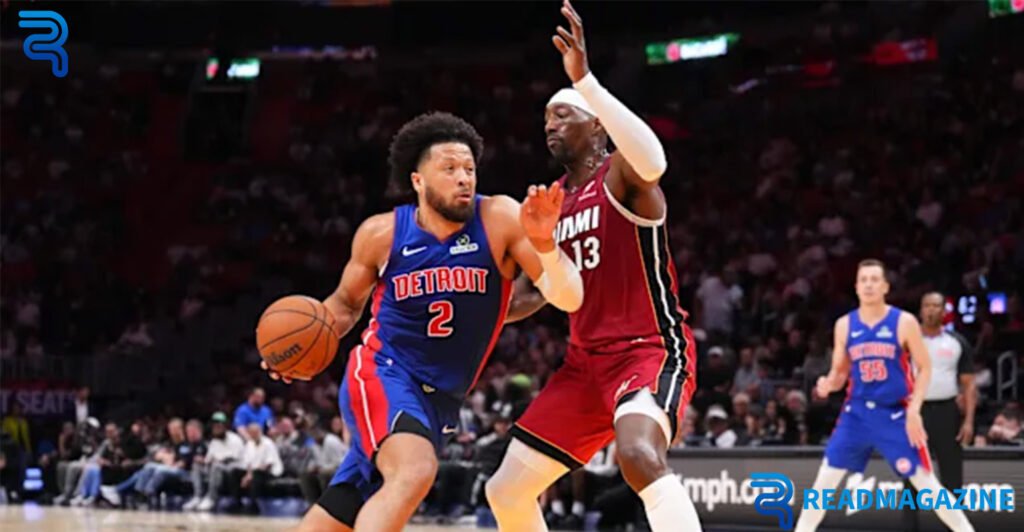
Scoring remains the most visible aspect of any basketball matchup. In a Pistons versus Heat contest, offensive production often comes from a mix of rising talent and established stars. The Pistons rely heavily on young playmakers such as Cade Cunningham, whose ability to attack the basket and create scoring opportunities makes him the focal point of the offense.
Cunningham’s versatility allows him to contribute in multiple ways. He can score from mid-range, distribute the ball to teammates, and control the pace of the game. When he performs at a high level, the Pistons’ offense becomes significantly more efficient.
On the other side, the Heat counter with experienced leaders like Jimmy Butler and sharpshooting threats such as Tyler Herro. Butler’s aggressive drives and clutch scoring ability often set the tone for Miami’s offense. Meanwhile, Herro’s perimeter shooting stretches the defense and creates space for teammates.
Shooting Efficiency and Offensive Rhythm
Beyond total points, shooting efficiency plays a vital role in determining the outcome. Teams that convert a higher percentage of their field goals often maintain momentum throughout the game.
The Pistons typically rely on fast breaks and transition opportunities to generate easy points. Their young roster thrives on speed and aggressive drives to the rim. However, consistency in outside shooting remains a key factor in sustaining offensive pressure.
The Heat approach offense with patience and precision. Ball movement and spacing create open shots for their shooters. When Miami’s perimeter players find their rhythm, the offense becomes extremely difficult to contain.
Analyzing shooting percentages and shot selection reveals how each team attempted to control the tempo of the game. Efficient scoring bursts often mark the turning points that shift momentum in favor of one side.
Defensive Contributions and Rebounding Impact
Defensive Strategy and Player Roles
Defense forms the backbone of many successful NBA teams. In the Pistons versus Heat matchup, defensive effort often determines which team gains the upper hand.
The Heat are widely recognized for their defensive discipline. Under the guidance of coach Erik Spoelstra, Miami emphasizes strong rotations, aggressive perimeter defense, and effective rim protection. Players communicate constantly and adapt quickly to offensive adjustments.
Jimmy Butler leads by example with his defensive intensity. His ability to guard multiple positions and disrupt passing lanes creates turnovers and fast-break opportunities. Miami’s defensive schemes aim to force opponents into low-percentage shots.
The Pistons also focus on defensive improvement. Their strategy centers on protecting the paint and contesting perimeter shots. Young players continue to develop defensive awareness, learning how to anticipate plays and challenge opposing scorers.
Rebounding and Possession Control
Rebounding remains one of the most important statistical categories in basketball. Teams that dominate the boards gain more possessions and increase their scoring opportunities.
The Pistons rely on athletic forwards and centers to secure rebounds on both ends of the court. Offensive rebounds provide second-chance points, while defensive rebounds prevent opponents from extending possessions.
The Heat approach rebounding with a collective effort. Guards and forwards frequently contribute by crashing the boards and supporting their big men in the paint.
In closely contested games, rebounding margins often determine the final result. Even a small advantage in this area can translate into crucial extra points.
Playmaking, Ball Movement, and Turnover Control
Assist Leaders and Team Coordination
Successful offenses depend on effective ball movement and unselfish play. Assists highlight how well players create opportunities for their teammates.
Cade Cunningham often leads the Pistons in assists. His court vision allows him to identify open shooters and deliver accurate passes. When the Pistons share the ball effectively, their offense becomes unpredictable and difficult to defend.
The Heat rely on strong playmaking from multiple players. Jimmy Butler frequently initiates offensive sets, while guards facilitate ball movement across the perimeter. This collaborative approach keeps defenses guessing.
Turnovers and Momentum Shifts
While assists represent positive teamwork, turnovers highlight areas where teams lose control of the game. Careless passes or rushed decisions can quickly swing momentum toward the opponent.
The Pistons aim to minimize turnovers by maintaining patience during offensive possessions. Young players must balance aggression with smart decision-making.
Miami, known for disciplined play, typically emphasizes ball security. Their structured offensive system reduces unnecessary risks and focuses on high-percentage opportunities.
Turnover statistics often reveal which team maintained composure under pressure. When teams limit mistakes, they preserve scoring chances and maintain control of the game.
Clutch Moments and Game-Changing Performances
Fourth Quarter Intensity
The final quarter of an NBA game frequently determines the outcome. As fatigue sets in and defensive pressure increases, only the most composed players deliver clutch performances.
Jimmy Butler has built a reputation as a reliable closer. His ability to attack the rim and draw fouls during crucial possessions often swings the momentum in Miami’s favor. Butler’s leadership in late-game situations provides stability for the Heat.
For the Pistons, Cade Cunningham often takes responsibility during critical moments. His confidence and scoring ability allow him to challenge defenders and create opportunities when the team needs points the most.
Momentum Runs and Strategic Adjustments
Basketball games are rarely decided by a single play. Instead, momentum shifts occur through scoring runs, defensive stops, and strategic coaching decisions.
Timeouts, lineup changes, and defensive adjustments influence the flow of the game. Coaches analyze matchups and adapt tactics to counter the opponent’s strengths.
Momentum runs often define the turning point of the contest. A series of three-pointers, fast-break finishes, or defensive stops can completely change the trajectory of the game.
Understanding these moments helps explain why certain players finish with impressive statistical performances. The numbers reflect not only individual talent but also the timing of key contributions.
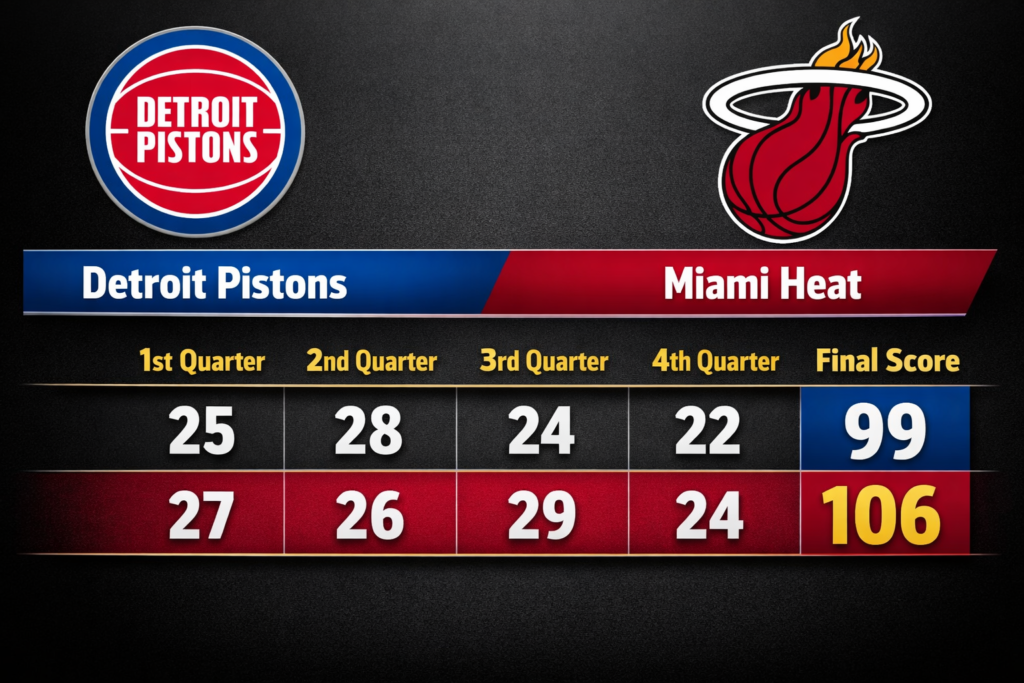
Match Score Table
| Team | 1st Quarter | 2nd Quarter | 3rd Quarter | 4th Quarter | Final Score |
|---|---|---|---|---|---|
| Detroit Pistons | 25 | 28 | 24 | 22 | 99 |
| Miami Heat | 27 | 26 | 29 | 24 | 106 |
Player Development and Emerging Talent
Another important aspect of the Detroit Pistons vs Miami Heat Match Player Stats review is the emergence of young players who continue to develop their skills at the NBA level. The Pistons have invested heavily in youth and potential. Their roster includes several promising athletes who are gradually becoming key contributors. These players bring energy, speed, and determination to the court. As they gain experience, their statistical impact becomes more noticeable in areas such as scoring consistency, defensive awareness, and playmaking.
Young players often face challenges when competing against experienced teams like the Heat. However, these matchups provide valuable learning opportunities. Facing elite defenders and seasoned leaders forces younger athletes to adapt quickly and improve their decision-making under pressure.
For the Miami Heat, player development also plays a major role in maintaining competitiveness. Miami has built a reputation for turning overlooked prospects into productive NBA players. Through structured coaching and strong team culture, many Heat players significantly improve their defensive discipline and shooting accuracy. This commitment to development ensures that the team remains competitive even as roster changes occur throughout the season.
These developmental stories are reflected in player statistics. When young athletes begin contributing more rebounds, assists, and efficient scoring, it signals growth that could influence future matchups between the two teams.
Coaching Strategies and Tactical Adjustments
Coaching decisions significantly influence the outcome of any basketball game. In the Pistons versus Heat matchup, strategic adjustments often determine which team gains the advantage. Coaches constantly analyze player performance, defensive matchups, and scoring trends throughout the game.
For the Pistons, the focus often centers on maximizing the strengths of their young core. Coaches may encourage fast transitions and aggressive drives to the basket. By pushing the pace, the Pistons attempt to create scoring opportunities before the opposing defense fully sets up.
The Miami Heat typically approach the game with a more structured system. Their coaching philosophy emphasizes discipline, ball movement, and defensive communication. Adjustments are frequently made to limit the opponent’s top scorer or disrupt offensive rhythm.
Timeouts also play an important strategic role. Coaches use them to reorganize defensive assignments, design scoring plays, and control momentum during critical moments. These adjustments can shift the direction of the game, especially during close fourth-quarter situations.
Ultimately, coaching strategies shape how players perform on the court. The influence of tactical planning becomes visible through player statistics such as assist numbers, defensive stops, and shooting efficiency.
Crowd Energy and Game Atmosphere
The atmosphere surrounding an NBA game can significantly impact player performance. When the Pistons and Heat face each other, the crowd often creates an electric environment that fuels competitive intensity.
Home-court advantage can provide a psychological boost for players. Fans bring energy, excitement, and constant support that motivates athletes to perform at their highest level. Loud arenas can also disrupt communication between opposing players, making defensive coordination more difficult.
In games hosted in Detroit, Pistons fans rally behind their young team with enthusiasm. Their support encourages players to maintain aggressive play and push the tempo. On the other hand, when the game takes place in Miami, the Heat benefit from the vibrant atmosphere of their home arena.
Crowd reactions often mirror the momentum of the game. A highlight dunk, a clutch three-pointer, or a defensive block can ignite the entire arena. These moments increase emotional intensity and sometimes inspire players to elevate their performance.
While statistics ultimately determine the outcome, the influence of fan support adds another fascinating dimension to the contest. The energy of the crowd frequently becomes part of the story behind memorable NBA matchups.
Statistical Trends and Future Matchups
Examining statistical patterns from the Detroit Pistons vs Miami Heat Match Player Stats also helps predict how future games might unfold. Analysts often review trends such as scoring averages, rebound margins, and assist ratios to understand which team holds the advantage in specific areas.
If the Pistons consistently outperform Miami in fast-break scoring, they may continue emphasizing speed and transition play in future encounters. Conversely, if the Heat dominate in defensive efficiency, they will likely maintain their disciplined approach to slowing down opposing offenses.
Player matchups also evolve over time. As younger Pistons players gain experience, they become more capable of challenging Miami’s established stars. This gradual improvement could create even more competitive contests in upcoming seasons.
Statistical analysis not only reflects past performance but also highlights potential adjustments for future games. Coaches, players, and analysts all study these numbers to refine strategies and improve team performance.
Conclusion
The Detroit Pistons vs Miami Heat Match Player Stats reveal far more than just numbers on a scoreboard. They tell the complete story of the game, highlighting the players who influenced every phase of the matchup. From offensive scoring bursts to defensive stops and rebounding battles, each statistic reflects a key moment in the contest.
The Pistons displayed energy and determination, relying on their young talent to push the pace and challenge Miami’s defense. Meanwhile, the Heat demonstrated the value of experience and tactical discipline. Their ability to execute plays under pressure proved crucial during important stretches of the game.
Analyzing player statistics allows fans to appreciate the depth and strategy behind professional basketball. Each rebound, assist, and defensive play contributes to the broader narrative of the match.
As these teams continue to compete throughout the NBA season, future matchups promise even more excitement. With emerging stars and proven veterans on both sides, the rivalry between Detroit and Miami remains an intriguing storyline for basketball enthusiasts.
FAQs
Q1 What makes the Detroit Pistons vs Miami Heat matchup interesting
The matchup combines youthful energy from the Pistons with the disciplined and experienced style of the Heat, creating a competitive and unpredictable game.
Q2 Why are player stats important when analyzing basketball games
Player statistics help explain how individual performances contribute to team success, revealing scoring efficiency, defensive impact, and playmaking ability.
Q3 Which players usually stand out in Pistons vs Heat games
Players like Cade Cunningham for the Pistons and Jimmy Butler or Tyler Herro for the Heat often deliver strong performances in these matchups.
Q4 How do rebounds affect the outcome of a basketball game
Rebounds provide extra possessions. Teams that secure more rebounds often create additional scoring opportunities and limit the opponent’s chances.
Q5 What role do assists play in team success
Assists indicate effective ball movement and teamwork. Teams with higher assist numbers usually create better scoring opportunities and maintain offensive rhythm.
Visit Readmagazine for more blogs.